
Featured on BBC1, Radio 4, and in countless live-event appearances, NAO robot Stanley Qubit, made by Aldebaran Robotics, became one of the most famous robots in the world in the run-up to the COVID pandemic.

Owned by tech journalist, author, and editor Chris Middleton, Stanley Qubit helped numerous companies, organisations, colleges, and schools imagine an AI- and robot-enabled future, sparking debate about automation, intelligent machines, jobs, and ethics, while providing many people with their first experience of a humanoid robot.
• When COVID lockdowns caused a long pause in conferences and live events, Chris withdrew the robot from service. Aldebaran Robotics ceased trading in 2025, leaving NAO and Pepper machines unsupported. As a result, we regret it is no longer possible to hire the robot.
What could Stanley Qubit do?

During the robot’s useful life, it addressed captains of industry, greeted delegates at conferences, visited universities and schools, opened London restaurants, inspired people to enter the industry, and helped blue-chip corporations imagine the future. Stanley Qubit also co-hosted BBC1’s Sunday breakfast show, and was the first real robot to appear in an adaptation of ‘I, Robot’ on BBC Radio 4.
Chris Middleton

The robots’ owner, Chris Middleton, is one of the UK’s leading business and technology journalists, specialising in robotics, AI, space technology, quantum computing, fintech, and the cloud, with a focus on strategy, ethics, policy, and cultural change.
Chris is Contributing Editor of diginomica, and has written for Computing, Computer Weekly, The Guardian, and The Sunday Times, among many others, and edited some of the UK’s leading tech magazines and websites. He has appeared on BBC1, ITN, Radio 2, Radio 5Live, Talk Radio, and in the national press, and has written policy reports on robotics and other new technologies for Innovate UK.
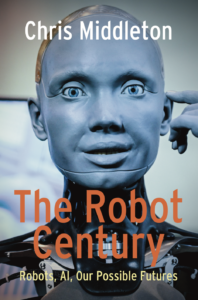 Chris Middleton’s new book The Robot Century – Robots, AI, Our Possible Futures was published worldwide in October 2026, and continues the robot’s work in educating readers about robots’ reality versus their fictional depictions. The illustrated 565-page book explores the social, cultural, ethical, and employment impacts of robotics and Physical AI – including their negative ones.
• In it, Chris interviews dozens of CEOs, technologists, entrepreneurs, academics, sceptics, and cultural commentators, and shares numerous case studies – both good and bad – of these technologies’ adoption.
Stanley Qubit (NAO robot) 
Bristol University 
Famous friends 
BBC1 appearance 
BBC1 appearance 
Guardian event 
With Ana Matronic 
Design Museum 
Design Museum 
Swansea University 
Performing on stand 
Performing on stand 
Shoreditch event 
Birmingham NEC 
At BAFTA 
Recording ‘I, Robot’ 
On the road 
Report for Innovate UK


